
When a child struggles to focus on homework, it is easy to assume that motivation is the problem. Sometimes, however, the study environment is making the work harder than it needs to be. Glare on a workbook, an adult-sized chair, stuffy air, background television, or a cluttered desk can all chip away at a child’s attention.
The good news is that Singapore families do not need a spare room or a large renovation budget to create an effective study area. Whether you live in an HDB flat, a condominium, or a landed home, a well-planned corner can give your child a comfortable and predictable place to learn.
Over the years, I have seen that the most useful study spaces are not necessarily the most expensive ones. They are simply well lit, comfortable, reasonably quiet, properly ventilated, and easy to keep organized. Here is how parents can create one at home.

1. Choose a Consistent Study Area
A separate study room is helpful, but it is not essential. A corner of your child’s bedroom, one end of the dining table, or a compact desk against a wall can work just as well. What matters most is consistency.
When your child returns to the same place for homework each day, that location becomes associated with focused work. This can make it easier to settle down and begin. SmileTutor’s guide to study habits for primary school students similarly recommends creating a quiet, comfortable area with good lighting and minimal distractions.
Try to avoid placing the desk:
- On the bed, which your child already associates with sleep and rest
- Along a busy route between rooms
- Directly beside a television or gaming setup
- Where other family members frequently walk across your child’s line of sight
For younger children, choose a place where an adult can remain nearby without constantly looking over their shoulder. The goal is supervision without hovering.
If space is tight, consider a foldable wall-mounted desk, a narrow console, or a portable study box that keeps stationery together. Even the dining table can become a consistent study area if it is cleared and prepared at the same time each day.
2. Get the Lighting Right
Poor lighting can make reading and screen work uncomfortable. The Singapore National Eye Centre recommends adequate workspace lighting, including the use of a table lamp, as well as regular breaks from near work. It also recommends keeping reading material at least 35 cm away and a computer screen about 50 to 60 cm away.
Use daylight where possible, but position the desk beside a window rather than directly facing it. This reduces glare and helps prevent your child from being distracted by activity outside. In west-facing Singapore homes, a sheer curtain or adjustable blind can soften strong afternoon sunlight without making the room too dark.
Add a desk lamp when the overhead light is not enough. For a right-handed child, placing the lamp on the left helps reduce the shadow cast by the writing hand. Reverse the arrangement for a left-handed child. When your child works on a laptop or tablet, keep a room light or desk lamp on instead of relying on the screen as the only light source.
This matters in Singapore, where childhood myopia is common. HealthHub reports that about half of children in Singapore have myopia by age 12. Lighting alone cannot prevent myopia, but adequate lighting, sensible viewing distances, outdoor activity, and breaks from continuous near work are good habits to encourage.
3. Use a Comfortable Desk and Chair
Your child’s furniture does not need to be elaborate, but it should support a comfortable working position. When seated, your child should be able to rest their feet on the floor or on a stable footrest. Their shoulders should feel relaxed, and their forearms should rest comfortably on the desk while writing.
If the chair is too high, use a proper footrest rather than letting your child’s legs dangle. A small cushion may help if the seat is too deep, provided it remains firm and secure. If your child uses a monitor, place it directly in front of them at a comfortable height and viewing distance.
Furniture should also be reviewed as your child grows. A setup that suited a Primary 2 student may no longer be comfortable two years later. Parents who want more ideas can refer to SmileTutor’s article on why a suitable study table matters.
Encourage your child to change position and move during breaks. A short stretch, a walk to refill a water bottle, or a few minutes away from the desk is more refreshing than switching immediately to another screen.
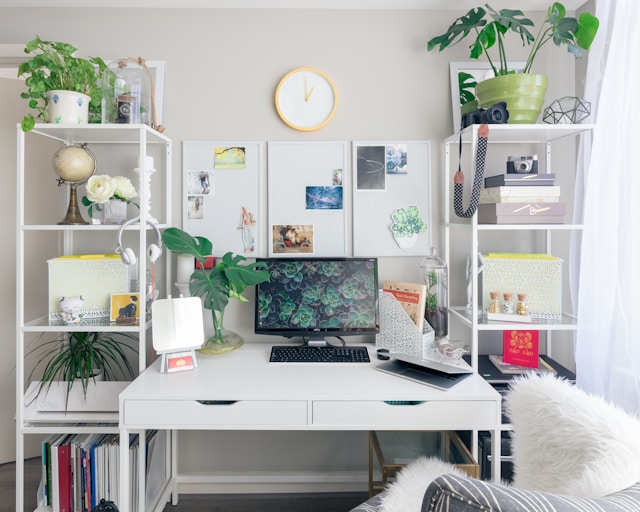
4. Reduce Noise and Visual Distractions
Complete silence is rarely realistic in an HDB flat or condominium. Fortunately, the aim is not to eliminate every sound. It is to reduce interruptions that repeatedly pull your child’s attention away from the task.
Close the door when practical, lower the television volume, and schedule noisy household tasks outside the main study period. Curtains, rugs, and fabric furniture may also soften echoes in a room. If renovation work is taking place nearby, consider shifting demanding work to a quieter time or using a library for that particular day.
Agree on device boundaries before homework begins. A phone can be placed in another room or kept out of reach with notifications turned off. Position the desk so your child is not facing the television, the main doorway, or another busy part of the home.
These expectations should be realistic. Some children work well with gentle background sound, while others need greater quiet. Observe what helps your child instead of assuming that one arrangement will suit everyone.
5. Keep Supplies Organized and Within Reach
A cluttered desk creates small but frequent interruptions. If your child has to search for a ruler, charger, or worksheet every few minutes, it becomes harder to maintain momentum.
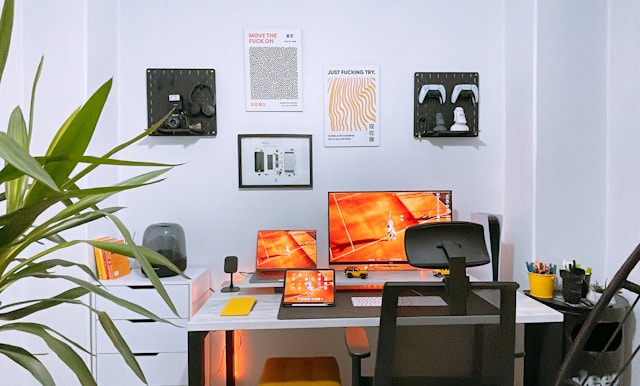
Keep only the materials needed for the current task on the work surface. Store other supplies in labeled boxes, drawers, or a nearby shelf. Vertical storage, such as a pegboard or wall shelf, can be especially useful in smaller Singapore homes.
Build a two-minute reset into the end of each session. Ask your child to return stationery, clear scraps of paper, pack the schoolbag, and prepare what is needed for the following day. This helps keep the space usable without turning tidying into a major chore
6. Maintain Ventilation and a Comfortable Temperature
A study area should not feel hot, stuffy, or directly exposed to a strong stream of cold air. Whenever outdoor conditions allow, open windows or doors to improve airflow. The National Environment Agency notes that residents can improve ventilation at home by opening doors and windows and using fans to promote air circulation when needed.
If the room is air-conditioned, service the unit and clean its filters according to the manufacturer’s instructions. Avoid placing the desk directly below an air-conditioning vent or in front of a powerful fan. What feels comfortable will vary, so use your child’s comfort as a practical guide rather than chasing one supposedly perfect temperature.
During hazy conditions or when outdoor air quality is poor, follow current official guidance before opening windows. The best ventilation approach depends on the weather and the conditions outside the home.
7. Watch for Dampness and Mold
Singapore’s humid climate makes moisture management an important part of maintaining a healthy study area. Check walls, ceilings, window frames, wardrobes, and the area around air-conditioning units for signs of persistent dampness.
Possible warning signs include:
- A musty smell
- Recurring dark patches
- Peeling or bubbling paint
- Condensation that repeatedly forms in the same area
- Water stains near windows, pipes, or ceilings
Do not place a desk against a visibly damp wall, and avoid drying wet laundry immediately beside the study area. Leave some space around large furniture where possible so that air can circulate. Repair leaks and faulty window seals promptly instead of repeatedly painting over the affected area.
SmileTutor has previously explained how mold can affect children’s health in Singapore, particularly for children with allergies or asthma. If dampness or mold keeps returning after basic cleaning, the moisture source may require investigation. A qualified provider of professional mold remediation can assess the affected area and recommend appropriate treatment. Parents should compare providers and understand the proposed work before proceeding.
8. Build Healthy Study Routines
A good desk cannot compensate for an exhausting or inconsistent routine. The environment creates the conditions for learning, but habits determine how the space is used.
Try these practical steps:
- Set a regular starting time on most school days.
- Divide work into manageable blocks based on your child’s age and attention span.
- Include short breaks for movement, water, and rest.
- Prepare required books and materials before beginning.
- Protect adequate time for meals, sleep, and outdoor activity.
For eye comfort, remind your child to use the 20-20-20 rule recommended by SNEC: after 20 minutes of near work, look at something at least 20 feet away for 20 seconds. This is easy to remember and does not require special equipment.
If your child attends tuition after school, avoid filling every available minute with back-to-back lessons and assignments. A short transition break can help them return to work more calmly. SmileTutor’s guide to managing homework hassles offers additional ideas for building a consistent routine without making homework a daily conflict.
9. Support Without Hovering
A parent’s role is closer to that of a facilitator than a supervisor. Be available when your child needs clarification, but allow enough space for independent thought and manageable mistakes.
Invite your child to help design the study corner. Let them choose between two suitable lamps, decide how to label storage boxes, or select one small decoration. When children feel some ownership of the space, they may be more willing to use and maintain it.
Praise effort, preparation, and persistence rather than focusing only on grades. If concentration remains difficult, speak with your child calmly. The problem may be the environment, the difficulty of the work, tiredness, anxiety, or something else entirely. A new desk organizer will not solve every learning challenge, but a supportive conversation may reveal what is really getting in the way.
Final Thoughts
A healthy study environment is built through small, practical choices: a consistent location, adequate light, comfortable seating, fewer distractions, fresh air, organized materials, and a sustainable routine. None of these requires a complete renovation.
Start with the biggest source of friction in your child’s current setup. Move the desk, add a lamp, clear the clutter, or create a simple homework schedule. Then observe what improves. The best study corner is not the one that looks perfect in a photograph. It is the one that helps your child feel comfortable, focused, and ready to learn.

 Facebook