
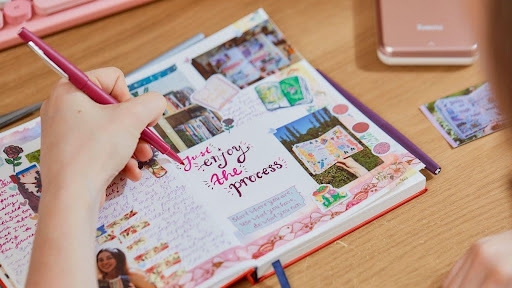
I loved reading ‘Diary of Amos Lee’ when I was younger! The series got me into journaling myself when I was trying to be him as an 11-year-old!
But I would only come to know the benefits of journaling years later through social media.
And honestly, who’d knew that just reflecting on the day and any thoughts you have could spark so much self-growth?
So while your child’s already doing that when they write in their diary at night, it’s a little different, unfortunately.
A diary is a daily log of thoughts, events, and feelings, while a journal focuses on specific topics, themes, and questions.
So there are many benefits to journaling, such as…
Self-Growth

There’re many benefits to journaling. But the best one for your child will probably be self-growth through self-awareness.
It’s like how they’re able to tell you what they did wrongly and how they won’t do it again in the future, after you tell them to go to the naughty corner and reflect on their mistakes.
Except this time, they’re doing it willingly, without getting punished for anything! So imagine how much introspective reflecting they’ll get done!
Set goals and achieve them

And since journaling also focuses on specific topics, a specific one you can have your child reflect on are their goals.
Let’s say your child has a school competition coming up soon, and they’re nervous. You could ask them to reflect on why they’re so nervous and what they can do about it.
Or if the new year is approaching, get them to think about what goals they want to achieve in the upcoming year for themselves and how they can achieve it!
Mental Health

(Credits: Institute of Mental Health)
And just like setting goals and reflecting on how your child can reach them, your child can also take the quiet time while they’re journaling to assess their mental state too.
Now, your child might not realise that they can do this or know how to do it. So you might have to guide them here.
Give your child a context and prompt, like “Today, when we were at McDonald’s, you were worried that they wouldn’t give you your burger in time. Why were you so worried? Do you think you can think about it in your journal?”
Being able to reflect on their emotions and why they acted the way they did gives them self-awareness.
Increases Creativity

And if your child is a particularly creative individual, they could also think about what they want to create next, just like how they planned for their goals!
Additionally, they could reflect using their creative energy to solve any problems they might have!
Sarah keeps hogging the slide in the playground. Maybe your child can take the time to reflect on what she’ll kindly tell Sarah the next time Sarah does it again!
Keeps a log of their life

Lastly, this is a personal favourite of mine.
Your child’s journals are a written version of their photo album, and flipping through their journals to see their progress in life is like flipping through their photo album from childhood till where they are now!
How To Get Your Child To Journal
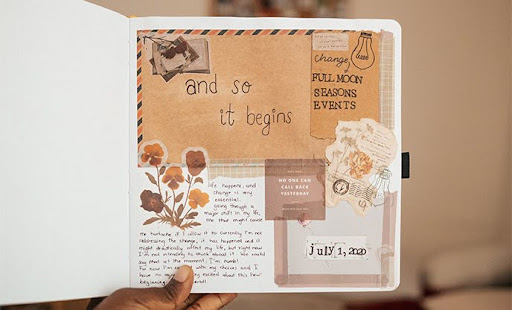
Now that you’ve decided you’d like your child to start journaling, discuss it with them. Tell them about this great thing that everyone is doing now. You can reflect on what lying to your child is like in your own journal later on.
During this time, you can also discuss the frequency and duration of their journaling. Because you want them to want to do it as well.
There’s no point in journaling if they don’t find it meaningful, right?
So let them decide how often they want to journal and for how long. Because even if it’s just once or twice a week, at least they’re still doing it!
But if they’re not too keen on journaling, lead by example and do it with them! Better yet, get the whole family to do it at a specific time every week, so this family time becomes a routine!
And give them prompts if needed. Sometimes, you might even have to guide your child along when they’re trying to process their emotions and regulate their thoughts while writing.
But try to remain as objective as possible. This is their reflection, not yours!
Lastly, let them read famous published journals like ‘Dork Diaries’, ‘Whoopie Lee’, or ‘Diary of Amos Lee’. This could inspire them to write in their journals, even give them a “writer’s voice,” and, of course, improve their language skills!
Conclusion

Journaling has come a long way from being just a book and pen activity for reflection.
It’s amazing how simply doing something with intentions can change your whole outlook on an activity, huh?
And since your child might not fully grasp the benefits that journaling will bring them, assist them.
Give them prompts, guide them, and let them get a fun journal and stationery they’d like, so they’re excited to journal! But, of course, not too much. Don’t spoil them!
And if you need prompts, you can find them easily online. Or you could also let one of SmileTutor’s experienced English or Literature tutors guide your child today!

 Facebook