
Choosing the right music instrument for your child isn’t just about what sounds nice — it’s about unlocking their confidence, creativity, and love for learning. But with so many options (and opinions!), how do you know what’s truly right?
Whether your child is 4 or 14, this age-by-age guide will help you make a smart, practical decision that fits your child’s interests — and your Singapore home.
Let’s find the instrument that won’t just sit in the corner — but one they’ll actually want to play.
Why Choosing the Right Instrument Matters
The best instrument isn’t always the fanciest — it’s the one your child feels comfortable with, excited about, and able to grow into.
To find that sweet spot, you’ll want to consider three main things: their body, their personality, and your home setup
Fit for Age, Body, and Learning Stage
Your child’s size matters more than you think — especially for instruments that require posture or finger reach. A six-year-old trying to stretch over adult-sized piano keys? Not fun.
Here’s a general rule of thumb:
- Ages 3–5: Stick with small, lightweight options like egg shakers, mini keyboards, or ukuleles.
- Ages 6–8: Kids can start managing beginner violins (¼ size), pianos, and recorders.
- Ages 9–12: Their motor skills are more developed, so guitars, flutes, and drums become realistic.
- Age 13+: Most teens can handle full-sized instruments — even wind or brass.
Always try before you buy — even among same-age kids, hand size and coordination vary a lot.
Motivation and Progress Depend on Fit

Some kids are natural performers. Others are more reflective or love experimenting with sounds. The right instrument should feel like an extension of who they are.
- Energetic & expressive kids often enjoy drums, voice, or anything rhythmic.
- Detail-oriented kids tend to thrive on piano or violin, where precision matters.
- Creative free-spirits may enjoy guitar or keyboard — instruments that allow self-directed learning and improvisation.
Your child doesn’t need to have a “musical personality.” But matching the vibe of the instrument to their temperament can make practice sessions a lot smoother.
Practical Factors: Cost, Noise, and Space
Let’s be honest — we all live with real constraints.
Some instruments are more affordable than others, not just upfront but long-term. A digital keyboard is usually a one-time buy, while a violin might need frequent tuning, rosin, string replacements, and lessons.
Space-wise:
- A ukulele tucks easily into a drawer.
- A full digital piano needs a fixed corner.
- A drum kit (even electric ones) can dominate a room — and raise eyebrows with neighbours.
If you’re in an HDB flat (like most of us), noise control matters. Many electric instruments come with headphone jacks — your best friend if you want peace after 10pm.
What Makes an Instrument the Right Fit for Your Child
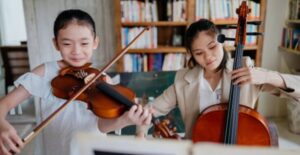
The best instrument isn’t the trendiest one — it’s the one your child can actually enjoy learning. To make a smart choice, think about how the instrument fits your child’s body, personality, and your home setup.
Age, Body Size, and Physical Readiness
Size and coordination matter a lot, especially for young kids.
- Ages 3–5: Start with light instruments like mini keyboards or shakers.
- Ages 6–8: They can handle small violins (¼ size), pianos, and recorders.
- Ages 9–12: Most are ready for guitars, flutes, and even digital drums.
- 13 and up: Teens can take on full-sized instruments comfortably.
Always test for comfort before committing. If it feels awkward, your child won’t want to play.
Personality, Learning Style, and Musical Curiosity

Different instruments suit different types of kids.
- Loud and lively: Drums, singing, or anything rhythmic.
- Focused and patient: Piano or violin.
- Creative and independent: Guitar or keyboard — easy for self-learning.
Some kids love to follow structure. Others want to explore freely. Choosing based on personality makes music feel fun, not forced. Or you can try out Free Music Lesson Trials and see what aligns with your child.
Practical Factors: Budget, Noise Level & Space (Especially in HDBs)
Music is great, but let’s be real — space and sound matter in Singapore flats.
- A digital keyboard with headphones is perfect for quiet play.
- A ukulele is portable and budget-friendly.
- Drum kits (even electric ones) need both space and neighbour tolerance.
Maintenance matters too — strings, reeds, and tunings can add up. Some instruments are lower maintenance than others.
Availability of Teachers and Trial Lessons in Singapore

Even the best instrument won’t help much if your child can’t get proper lessons.
Luckily, Singapore has lots of music schools, private tutors, and trial class options — from Yamaha to freelance teachers on Carousell.
Before buying, try:
- A few trial lessons to see what clicks
- Checking if there’s a teacher nearby or willing to teach at home
- Asking the teacher what instrument suits your child’s learning pace
A good teacher can make almost any instrument feel right. Start with someone patient and fun, not just qualified.
Best Music Instruments by Age Group
Not sure where to start? This section breaks it down by age — because what works for a preschooler won’t necessarily work for a tween. Each stage comes with its own set of physical abilities, attention span, and musical curiosity.
Let’s find the best instrument for your child’s age group — one they can enjoy and grow with.
Ages 3–5: Fun & Foundational Play
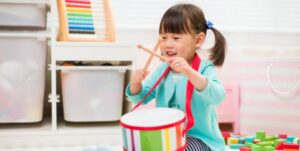
At this age, it’s all about exploration through sound. Kids are still building motor skills, so the focus should be on play, not performance.
Great beginner picks:
- 🥁 Percussion instruments – shakers, hand drums, bells
- 🎹 Mini keyboards – especially ones with colour-coded keys or pre-recorded sounds
Don’t worry about formal lessons yet. Just let them experiment and have fun. If they’re moving to the beat or copying simple rhythms — that’s already musical learning in action.
Tip: Look for instruments that can survive being dropped. You’ll thank yourself later.
Ages 6–8: Core Skills and Early Discipline
Now your child is ready for real structure — think notes, finger positioning, and basic rhythm.
Ideal instruments for this stage:
- 🎹 Piano or digital keyboard – excellent for visual learners and musical foundation
- 🎻 Violin (⅛ or ¼ size) – works well with Suzuki method if they enjoy precise practice
- 🎸 Ukulele – low-pressure, portable, and a great way to build finger dexterity
Kids in this range often enjoy “playing songs they know,” so look for teachers or apps that teach pop tunes alongside basics.
Fun matters more than exams at this age. If they’re smiling while practicing, you’re on the right track.
Ages 9–12: Expanding Musical Ability
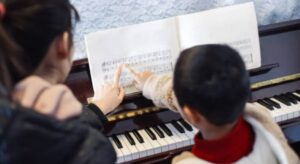
This is the golden window when many kids start to show clear musical preferences — or talent.
Now they can handle:
- 🎸 Guitar (nylon string) – gentler on fingers, great for chords and pop songs
- 🥁 Drum kit (acoustic or electronic) – perfect for energetic kids with strong rhythm
- 🎹 Digital piano – full-sized keys with pedal use
- 🎼 Flute or clarinet – good breath control and hand coordination required
At this stage, commitment becomes key. If your child enjoys lessons and shows progress, it may be time to invest in better quality instruments.
Age 13+: Personal Choice and Musical Identity
Teens usually have their own ideas by now — and that’s not a bad thing.
Let them lead the conversation. Support their interest, even if it’s not what you had in mind (yes, even if it’s the drums 😅).
Popular choices:
- 🎤 Voice – singing lessons can build confidence and self-expression
- 🎸 Electric guitar – ideal for rock, pop, and self-composed music
- 🎷 Saxophone or orchestral instruments – great for school bands or DSA tracks
- 🎧 Music production software – for teens who enjoy creating beats or digital music
This is where musical identity starts to form. Trust their instincts and encourage exploration — they’re shaping their own sound.
How to Make the Final Choice
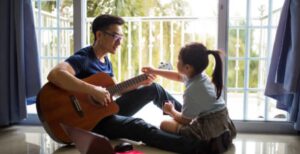
So you’ve narrowed it down — maybe two or three instruments feel like solid options. What now?
Here’s how to make that final call without stress (or buyer’s remorse).
Let Your Child Try Before You Buy
Don’t rush into a big purchase based on a hunch. Let your child touch, hold, and even play the instrument first. Let them experience.
- Sign up for a trial lesson or rent the instrument for a few weeks.
- Attend a class with a friend or cousin already learning it.
- Visit music stores that let kids experiment (many in Singapore do!).
Sometimes, what sounds good in theory falls flat in practice — or your child surprises you with a totally different interest.
Hands-on experience beats online reviews any day.
Look for Signs of Natural Fit or Struggle

Watch how your child reacts during lessons or casual play:
- Are they curious, asking questions, trying things out?
- Do they want to practice without being reminded?
- Or do they seem frustrated, bored, or tired after five minutes?
A little struggle is normal — learning takes effort. But if your child constantly fights it, it may not be the right fit.
The goal isn’t instant talent — it’s sustainable joy.
Stay Open to Changing Paths
Let’s be real — the first instrument might not be the instrument.
Some kids start with piano, then fall in love with guitar. Others drop violin, then thrive in a school band with the trumpet.
And that’s totally okay.
What matters is keeping the door open for music to stay in their life. Even switching instruments is better than quitting music entirely.
Who knows? One day, that “wrong” instrument might just be a stepping stone to the right one.
Summary Table: Best Instruments by Age
| Age Group | Recommended Instruments | Why It Works |
|---|---|---|
| 3–5 | Shakers, hand drums, mini keyboards | Easy to hold, fun-focused, builds rhythm & sound exploration |
| 6–8 | Piano, ⅛–¼ size violin, ukulele | Develops fine motor skills, introduces structure and discipline |
| 9–12 | Guitar (nylon), flute, digital piano, electronic drum kit | More coordination & stamina, ready for musical complexity |
| 13+ | Electric guitar, voice, saxophone, orchestral instruments, music production (DAWs/software) | Personal expression, school bands, or self-led learning — identity-driven stage |
Final Advice: Focus on Joy, Not Just Results
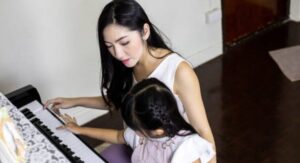
It’s easy to get caught up in exams, performance goals, or comparing progress with other kids. But if there’s one thing that makes music stick — it’s joy.
A child who enjoys playing will naturally get better over time. A child who feels pressured? Likely to quit by Primary 5.
So instead of asking, “Is my child improving fast enough?” — try asking:
- Are they smiling when they play?
- Do they hum their practice songs without being told?
- Do they show off new tunes to Ah Ma or their siblings?
These are the real wins.
🎵 Music is not a race. It’s a lifelong companion.
Start with joy, and everything else will follow.

 Facebook