
Not all POA students are the same — and neither are their exams. Whether your child is taking the N-Level or O-Level route, the way they’re taught Principles of Accounts (POA) can make or break their results. The difference isn’t just in difficulty — it’s in how they think, write, and apply what they’ve learned.
That’s why stream-specific tuition matters more than you might think. Let’s break down exactly how POA tutors in Singapore adapt their strategies to suit each stream — and what your child needs to succeed.
Key Differences Between N-Level and O-Level POA

Let’s be real — POA looks simple at first. Debits here, credits there, balance sheet nice and neat. But once students dive in, many hit the same wall: they’re memorising steps without understanding what they’re doing.
This happens across both N-Level and O-Level, but for different reasons. And if we don’t deal with these specific pain points early, students get stuck, frustrated… and start dreading POA.
Let’s break down the most common struggles — by stream.
How Curriculum Depth Affects Learning Style
N-Level students tend to learn by repetition — format, format, format.
They can recall that a liability goes on the credit side, but ask why, and they’ll mumble something about “my teacher say one.”
This over-reliance on memorisation works for simple tasks… until they get a slightly different question and panic. When there’s no true understanding, one curveball can throw the whole thing off.
What the Exam Format Tells You About Skills Needed

O-Level students usually grasp the content better. But here’s the irony — many still bleed marks on questions they actually understand.
Why? Poor phrasing, weak explanations, or simply writing too little.
A theory question might ask: “Why is it important to record bad debts?” and the student just writes “So we know.”
That’s a giveaway that tuition isn’t training them to think like an examiner. And in O-Level, how you express your answer is just as important as getting the right idea.
Why Stream-Specific Learning Objectives Shape Tuition Focus
Here’s where things get tough.
Students bridging from N(A) to O-Level often assume they just need to “study harder.” But the jump isn’t about effort — it’s about approach.
At O-Level, exam questions expect you to justify, not just identify. Many students aren’t ready for that.
They start falling behind not because they’re lazy — but because no one taught them how to switch gears from recall to reasoning.
Common Struggles Faced by POA Students in Each Stream

POA can be a love-it-or-hate-it subject — and more often than not, students start off in the second camp.
The biggest issue? They memorise steps, but don’t really get what’s going on behind the numbers. Whether they’re in the N-Level or O-Level stream, the struggles are real — but different.
Here’s where most students trip up, and why tuition needs to go beyond just drilling formats.
Why N-Level Students Often Miss the Big Picture
N-Level students usually pick up the steps fast — journal entries, account classifications, trial balance. Easy, right?
Until they get one question that’s phrased differently… and everything falls apart.
Most of the time, it’s because they’re trained to follow steps blindly. They know what to do, but not why.
And let’s be honest — who’s going to enjoy a subject when it feels like a confusing checklist? Without understanding the logic, POA just becomes another memory test.
How O-Level Students Lose Marks Despite Knowing the Content
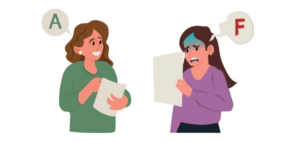
At O-Level, students know their stuff. But their marks don’t always show it.
They get tripped up by theory questions, misread what’s being asked, or scribble down vague answers like “It is correct because it is accurate.”
That’s not going to cut it.
The O-Level paper isn’t just testing content — it’s testing how well students apply and explain their knowledge.
So even if they’re good with numbers, if they can’t express themselves clearly, those marks quietly slip away.
The Real Challenge When Moving From N(A) to O-Level
This one hits hard.
Students moving up from N(A) to O-Level often feel blindsided. They think they’ve got POA covered — but suddenly the questions feel “longer,” “wordier,” and “more cheem.”
Because they are.
At N(A), it’s mostly about getting the right format and numbers. At O-Level? It’s about justifying choices, explaining errors, and thinking like an accountant.
It’s not just more content — it’s a whole different mindset. And if tuition doesn’t adjust for that shift, students start losing confidence fast.
How POA Tuition Adapts to Each Exam Stream

Here’s the truth: you can’t teach every POA student the same way.
N-Level students need support that feels simple and structured. O-Level students need coaching that sharpens their thinking and writing. And those moving from N(A) to O? They need a total mindset shift.
A good Secondary POA tutor doesn’t just teach accounts — they teach the right way for each stream.
Let’s look at how smart tuition adapts to match what each student actually needs.
The Most Effective Way to Build Confidence in N-Level Students
For N-Level learners, the goal is clarity. If the student is already struggling in class, throwing more worksheets at them isn’t going to help.
What works? Breaking things down step by step, using colour-coded notes, and drilling key formats until it becomes second nature.
A good tutor knows when to slow down, when to repeat, and how to explain things in ways that make sense to teenagers who “don’t like maths.”
Sometimes it’s as simple as using relatable examples — “Imagine you’re selling bubble tea…” works better than “Assume a business earns revenue.”
Confidence comes from success. And success comes from lessons that match their pace.
Why O-Level Students Need Exam-Centric Coaching

O-Level students don’t need more content — they need better strategy.
By this level, most students already know the topics. But they’re still losing marks in theory, structure, and speed.
That’s why tuition must shift gears. It’s no longer just about teaching — it’s about coaching students to think like the examiner.
- What does this question really want?
- How many marks is it worth?
- What keywords must I include to get full credit?
If a tutor isn’t giving timed practices, structured feedback, or marking schemes — the student is walking into the exam blind.
This is where many students make the leap from B3 to A1.
How Good Tutors Bridge the N(A) to O-Level Gap Smoothly
The N(A) to O-Level switch isn’t just harder — it’s disorienting.
Students who once felt “okay” at POA start struggling. They say things like “last time I can one… now suddenly I fail.”
That’s because the rules changed — but no one told them how.
A skilled tutor knows how to rebuild their foundation while teaching forward. It’s not just re-teaching old topics; it’s reinforcing key concepts in a way that aligns with O-Level expectations.
They’ll introduce theory earlier, adjust the pace, and flag topics that commonly trip up stream-switchers (like bank reconciliation or analysis questions).
The goal? Make the transition feel doable, not dreadful.
Key POA Topics That Require Stream-Specific Teaching

Not all POA topics are created equal — and how they’re taught can make or break a student’s confidence.
Some topics seem “easy” on the surface but actually demand different thinking depending on the stream. If tuition doesn’t adjust the teaching method, students end up either memorising blindly or overcomplicating what should be simple.
Let’s break down the big four that need tailored approaches.
Teaching Double Entry: Memorise or Understand?
Double entry is the lifeblood of POA. But here’s the difference:
N-Level students often just memorise — “debit what comes in, credit what goes out.” They treat it like a chant… but don’t really get the meaning.
That works until they face a new situation (e.g. discount received), and suddenly they’re stuck.
For O-Level, students must understand the logic behind every transaction. Why is rent expense a debit? What’s the impact on the profit and loss account?
A good tutor trains N-levels to spot patterns and O-levels to explain them.
Ledger and Trial Balance: Step-by-Step vs Error Spotting

At N-Level, ledgers and trial balances are all about following steps. Enter, post, total, done.
So tuition here focuses on repetition and correctness. Students need muscle memory and confidence in the process.
But in O-Level, just “doing the ledger” isn’t enough. Students are expected to identify mistakes, spot missing entries, or explain why the trial balance doesn’t tally.
That means tutors need to train students to be detectives — not just data entry clerks.
Financial Statements: Format vs Financial Storytelling
Ask any POA student — the profit & loss statement gives them major stress.
For N-Level, the focus is on format. Where does this go? What’s the heading? Is the total underlined?
But O-Level pushes further — students need to interpret the numbers. Is the business profitable? What’s affecting the gross profit? They’re not just preparing statements… they’re telling the business’s story.
Tuition must shift accordingly: teach N-Level the structure, teach O-Level the meaning.
Theory Questions: Why One-Word Answers Won’t Cut It

Theory questions are every student’s nightmare — especially when they realise one-liners don’t earn marks.
N-Level students often give textbook-style definitions without context. O-Level students? They try to explain… but without proper phrasing or accounting terms.
And that’s the trap — both levels struggle with theory because they’re rarely taught how to write it well.
Tuition must include model answers, practice phrasing, and feedback — not just content drilling.
Because in POA, sometimes how you say it is just as important as what you say.
Choosing the Right Tuition Approach Based on Stream

Let’s face it — not all tuition is created equal.
You could have the most experienced POA tutor in town, but if they’re teaching every student the same way, from the same notes, with the same pace… something’s off.
The right tuition isn’t just about subject knowledge — it’s about stream-awareness.
Because how you teach an N-Level student is very different from how you coach an O-Level one.
Here’s how to spot the difference.
How to Tell If a Tutor Really Adjusts by Stream
If a tutor pulls out a one-size-fits-all worksheet the moment your child sits down… red flag.
A tutor who understands stream-specific needs will ask:
- “Which stream is your child in — N(A), N(T), or O-Level?”
- “Are they struggling with theory, formats, or application?”
- “Do they need help with time management or just concepts?”
Even their lesson structure will reflect it. N-Level lessons should feel more guided and structured, while O-Level sessions will involve more discussion, timed practice, and analysis.
The best tutors adapt on the fly — they’ll switch strategies depending on how your child learns and where they’re stuck.
Key Questions Parents Should Ask Before Enrolling

Don’t be shy — interview the tutor before you commit. You’re not just buying lessons, you’re investing in results.
Here are some useful questions to ask:
- “Do you use different materials for N and O-Level?”
- “How do you handle students who are bridging from N(A) to O?”
- “Will my child get theory practice and not just accounting formats?”
- “How do you track progress?”
If the tutor looks confused, gives vague answers, or insists that POA is “the same for all”… time to move on.
Conclusion: POA Success Depends on Stream-Smart Teaching

POA isn’t just about debit and credit — it’s about teaching the right student in the right way.
An N-Level student needs confidence, clarity, and lots of step-by-step reinforcement. An O-Level student needs strategy, expression, and exam-focused thinking. And for those bridging from N(A) to O? They need a roadmap, not just revision.
That’s why stream-specific Secondary POA tuition isn’t optional — it’s essential.
If your child’s struggling with POA, don’t just throw more worksheets at them. Look for a tutor who understands the difference between content and context. One who adjusts, adapts, and truly teaches for understanding.
Because when students feel seen, supported, and challenged at the right level — that’s when POA starts to make sense.
And hey, they might even start to enjoy it.

 Facebook