Artificial intelligence (AI) is no longer a distant concept confined to research labs or global tech hubs. It has become a fundamental part of daily life, from the way students access information to how businesses automate processes. In Singapore, this transformation is happening rapidly, reshaping both education and workforce development.
Across industries, companies are restructuring operations around AI-powered systems. Similarly, educational institutions in Singapore are beginning to integrate AI into classrooms and curriculum planning. The message is clear: understanding AI is no longer optional; it is essential.
Yet there remains a significant gap. While students often use AI-driven tools daily, few truly understand the underlying systems that drive these technologies.
Bridging this gap is critical, particularly in one often overlooked domain: software testing.
What Generative AI in Software Testing Really Means Without the Jargon
Software testing ensures that applications work as intended and meet quality standards. Traditionally, engineers had to manually write and execute detailed test cases, a process that was methodical, precise, and often time-consuming.
Today, AI is transforming this process. Generative AI tools can interpret natural language instructions to automatically create test cases, simulate user behavior, and identify potential errors.
This allows engineers to focus on higher-level analysis while AI handles repetitive and complex testing tasks.
For students, learning about generative AI in software testing introduces logical thinking, structured problem-solving, and a systematic approach to technology.
These skills are transferable, helping learners critically evaluate systems and processes, an essential advantage for future careers in any field influenced by technology.

Why AI Literacy Is Becoming Essential in Singapore’s Education System
Singapore has positioned itself as a global innovation hub, with AI literacy playing a central role in its strategy. The demand for AI-skilled professionals is rising across sectors, from finance and healthcare to logistics and public services. Understanding AI is no longer a specialized skill; it is foundational for the next generation.
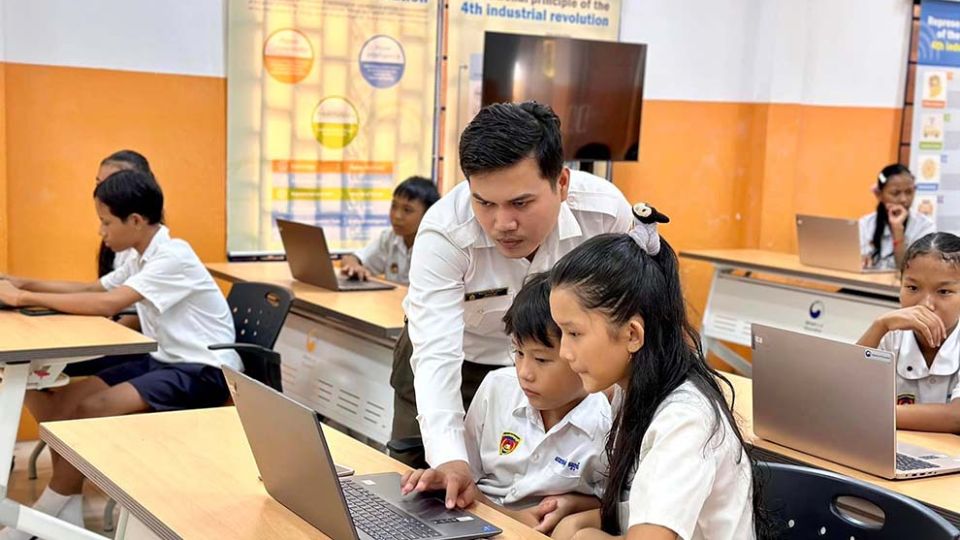
Educational institutions are already evolving. AI-driven learning platforms enable personalized instruction, adaptive curricula, and real-time feedback.
Exposure to AI tools in school settings prepares students to navigate increasingly automated environments, enhancing both cognitive skills and technological fluency.
Parents often ask whether coding expertise is necessary.
The answer is not entirely. What matters most is developing an understanding of logical structures, data-driven decision-making, and systematic problem-solving, all of which software testing fosters.
How Tutors and Parents Can Introduce Testing Logic Early
Introducing software testing concepts does not require advanced technical training. Foundational logic can be cultivated through simple exercises and practical examples.
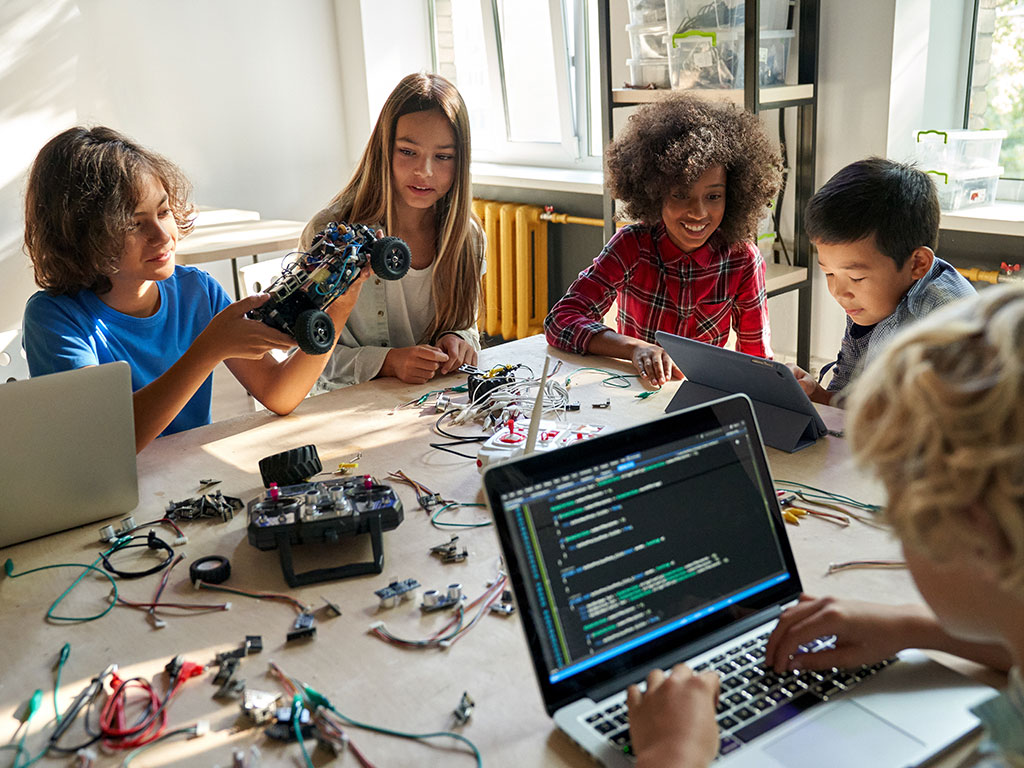
Consider mathematics. When students check their answers by working backward, they are performing a form of testing. When revising essays for clarity and grammar, they are engaging in quality assurance. Even debugging a simple Scratch or Python project demonstrates core testing principles.
Tutors can integrate basic coding exercises, logic puzzles, and system evaluation tasks into lessons. Parents can reinforce these lessons by encouraging analytical questions. Why did this app behave unexpectedly? How would you solve it? These discussions cultivate curiosity, logical reasoning, and a problem-solving mindset.
Early exposure to AI-related skills aligns with national strategies for workforce readiness and ensures that students are well-prepared for future technological challenges.
The goal is not to overwhelm children with technical details. It is to nurture a mindset where systems can be analyzed, improved, and tested.
From Classroom to Career: The Growing Demand for AI-Savvy Talent in Singapore
Software testing knowledge has direct implications for career readiness. Singapore’s digital economy is expanding rapidly, with companies investing heavily in AI, cloud computing, cybersecurity, and automation. Each technological innovation requires robust testing to ensure reliability and performance.
Proficiency in software testing demonstrates precision, risk awareness, and strong analytical capability. Employers value professionals who can evaluate and validate AI systems, even beyond technical roles.
Project managers, product designers, and business analysts also benefit from understanding testing processes, as this knowledge supports better decision-making and operational oversight.
Students exposed to software testing concepts gain a competitive edge. By linking classroom learning to real-world applications, they develop skills that are increasingly in demand in Singapore’s evolving tech ecosystem.
How Exposure to AI Tools Strengthens Analytical Thinking and Problem-Solving
Beyond career readiness, AI exposure cultivates critical thinking and cognitive agility. Working with AI-powered platforms encourages students to ask structured questions: What input produced this outcome? Why did the system respond in this manner? What variables influenced the result?
Engaging with generative AI testing tools helps students understand cause-and-effect relationships and develop iterative problem-solving skills. Technological fluency is essential for adaptability, enabling learners to navigate rapidly evolving work environments with confidence.
Furthermore, testing AI systems teaches attention to detail and precision. Small errors in code or logic can disrupt outcomes. This instills diligence and accountability, which extend far beyond technology into academics and daily life.
Problem-solving becomes less about trial and error and more about systematic evaluation.
Future-Proofing the Next Generation: A Practical Roadmap for Families and Educators
How can parents and educators prepare students today for an AI-driven tomorrow?
- Integrate AI discussions into daily learning. Normalize conversations about technology and its applications to build comfort and curiosity.
- Introduce structured thinking and logic exercises. Basic coding, debugging activities, and logic puzzles develop systematic reasoning.
- Connect learning to real-world applications. Demonstrate how software testing and AI literacy translate into career opportunities and problem-solving scenarios.
- Focus on mindset over mastery. The objective is to cultivate adaptability, analytical clarity, and technological confidence, not to produce expert engineers immediately.
Singapore’s emphasis on strategic skill development ensures that students exposed to AI concepts today are better prepared for the workforce tomorrow. By understanding how systems are built, tested, and improved, including the use of generative AI testing tools, learners transition from passive consumers of technology to informed, capable contributors.
The AI revolution is not approaching. It is already underway. Preparing students to navigate this landscape thoughtfully and confidently ensures they are not merely participants but leaders shaping Singapore’s future innovation ecosystem.

 Facebook