Most students grow up handling money — but never really understanding it. Ask them where their pocket money went, and you’ll probably get a shrug. But something powerful happens when they start learning POA (Principles of Accounts).
Suddenly, dollars make sense. Patterns emerge. Spending becomes intentional.
In this article, we’ll explore how POA transforms not just test scores, but mindsets — helping students build real-world financial confidence that lasts far beyond the classroom.
What Exactly Is POA — And Why It’s More Than Just Accounting

When students hear “POA,” they either groan… or panic. Sounds like some dry subject full of ledgers and numbers, right?
But what most don’t realise is — POA is one of the most practical subjects you’ll ever learn in school. It’s not just about scoring marks. It teaches how money actually works in the real world.
For many students, POA is the first time they start making sense of savings, spending, profits, and loss. And that clarity? It changes everything.
A Simple Breakdown of What POA Teaches
Okay, so what is POA really?
In short — it’s the language of money. Students learn how to record business transactions, track income and expenses, and prepare financial statements like the pros do.
But it’s not just business stuff. Even basic concepts like “what’s an asset” vs “what’s a liability” start clicking into place. Suddenly, the word “loan” isn’t just a vague adult thing — students get how it affects their financial position.
It’s like the school version of money training, minus the boring textbook tone (unless your teacher really is boring, then maybe get a POA tutor lah).
How POA Builds Logical Thinking About Money

Here’s where POA gets interesting — it teaches students to think like detectives.
Every transaction is a puzzle:
Who paid? Who received? What accounts changed? Is it income or expense?
Students start to see how everything in finance is connected. That $10 you lent your friend? Technically a receivable. The $80 you spent on concert tickets? Definitely not an asset.
Over time, this trains their brain to break things down logically. Money stops being abstract. It becomes something you can understand, manage, and even predict.
And once students get the hang of this? Wah — you can really see their confidence grow.
How POA Transforms a Student’s Money Mindset

For many teens, money just comes and goes. One day they have $50 in their wallet, the next day it’s all gone — and they have no idea what happened. Sound familiar?
That’s because most students were never taught how to think about money. Not emotionally, not practically, and definitely not logically.
But the moment they start learning POA?
Something shifts.
They begin to see money as more than just a number on a screen. It’s a flow — and it can be tracked, controlled, even planned.
From “I Don’t Know Where My Money Went” to “I Track Every Dollar”
POA students learn how to track money with purpose.
At first, they’re recording business transactions in class. But soon, they start applying it outside too — like remembering how much they spent at 7-Eleven, or realising they’ve been GrabFood-ing a little too often.
It’s not about being stingy. It’s about awareness. That clarity makes them more mindful — and they become the ones choosing how to use their money, not just letting it disappear.
POA Shifts Students From Impulse Spending to Budgeting Habits
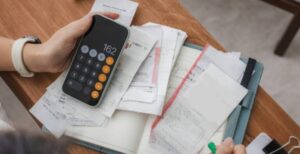
POA subtly trains students to pause and plan.
When they’re used to balancing ledgers and projecting costs, they start thinking:
“Eh, if I buy this now, will I have enough left next week?”
That kind of thinking? Most teens don’t do it — until POA gets them into the habit.
Bit by bit, they move from impulse to intention. And once that happens, budgeting becomes second nature.
Real-Life Applications: How POA Helps Students Handle Money Better

POA isn’t just about passing exams or memorising terms. What surprises many students (and even parents) is how practical the skills are in real life.
Once students “get it,” they start applying POA concepts to their own money — and suddenly, they’re not just better at school… they’re better with cash too.
Managing Pocket Money with POA Concepts
Before POA, most students treat their allowance like it’s free-flow. Spend first, think later.
But after learning how to record income and expenses, they start managing their pocket money like a mini budget. Some even set up simple tables on Google Sheets — recording what they spent on food, transport, even CNY shopping.
It’s not about being stingy. It’s about understanding where their money goes, so they can make smarter choices.
Budgeting for Big Purchases (e.g. Phone, Tuition, Gifts)

Saving up for a new phone? Birthday gift for Mum? POA helps students break big goals into small, trackable steps.
Instead of saying “I don’t have enough,” they start planning:
“Okay, I need $180. If I save $10 a week, that’s 18 weeks.”
That kind of thinking? It’s pure accounting logic — applied in a very real way.
Plus, it teaches delayed gratification. And in this TikTok world, that’s a rare and valuable mindset.
Starting a Side Hustle? POA Gives You the Basics
Some students take things a step further. They sell thrifted clothes, offer tutoring, or bake brownies to sell during class parties.
With POA, they already understand basic cost vs revenue. They know to track expenses, calculate profit, and reinvest.
It’s not some atas startup thing. It’s just good money sense. And POA gives them the foundation to build and grow — even if it’s just a tiny side hustle at first.
The Deeper Skillset POA Builds

Beyond tracking money, POA sharpens how students think. It’s not just about math — it’s about mindset. The subject quietly builds habits that many adults still struggle with: clarity, confidence, and control over finances.
Let’s break it down.
Cause-and-Effect Thinking Through Debits and Credits
Debits and credits sound chim. But once students grasp the logic, they start seeing cause-and-effect everywhere.
If money goes out, something decreases. If it comes in, something else increases. There’s always a balance. Always a reason.
This kind of thinking trains students to slow down and consider impact — not just financially, but mentally too. It’s the opposite of “just whack and hope for the best.”
Confidence in Making Small Financial Decisions Early

You know those moments when students hesitate — “Should I buy this?”, “What if I run out later?” That indecisiveness fades with POA.
Why? Because they’ve practised decision-making through numbers. They’ve seen how one small cost affects the big picture. So when it comes to real-life situations — topping up their EZ-Link or deciding to eat at Toast Box vs canteen — they’re more sure of themselves.
It’s not about being calculative. It’s about being clear and intentional.
POA Students Ask Better Money Questions
One surprising side effect? POA students start asking really good questions.
Not just “Can I afford this?” but
“What’s the opportunity cost?”
“Is this a one-time splurge or a recurring cost?”
“Will this add value or become a liability?”
They start thinking beyond surface-level spending — and that’s when you know they’re really getting it.
POA vs Non-POA Students — A Mindset Shift You Can See

Ask two students the same question:
“Would you take a $500 loan to buy the latest iPhone?”
One shrugs and says, “Why not? I’ll pay later.”
The other raises an eyebrow and says, “But got interest or not?”
That’s the POA difference.
Once students start thinking in terms of cost, value, and consequences, it’s very obvious who’s had that exposure — and who hasn’t.
How POA Students View Debt, Savings, and Value Differently
POA students don’t see debt as just “borrowing money.” They see it as a liability that affects your net position.
They understand that savings are more than just leftovers — they’re planned surpluses. And when it comes to value, they’re more likely to ask:
“Is this worth the price?” instead of “Is it trendy?”
Even small things, like choosing water over bubble tea, become mindful decisions — not random spending.
It’s not that POA students are stingy. They just have financial clarity others don’t.
Why POA Students Often Make Smarter Financial Choices

Because they’ve practised analysing transactions, POA students are better at weighing options.
Should I spend now or save for later?
Should I buy secondhand or brand new?
Should I commit to this subscription, or cancel?
They’ve seen how one decision can snowball into bigger outcomes. So they pause, reflect, and decide with purpose.
That’s not something you can teach overnight. But with POA, it comes naturally over time — and the results show in everyday life.
Should Every Student Learn POA?

Let’s be honest — not everyone will become an accountant. But almost everyone will earn money, spend money, and (hopefully) save money in life.
That’s why POA isn’t just a niche subject. It’s a practical life skill.
Whether your child wants to run a business, become a freelancer, or just stop overspending on Shopee, POA gives them the tools to make smarter financial decisions early on.
Who Benefits Most From Learning POA
POA is great for students who like structure, patterns, and logic. But it’s also surprisingly helpful for those who struggle with math or dislike memorisation-heavy subjects.
Why? Because POA is hands-on. It teaches through real examples, not just theory. Once students start seeing how numbers tell a story, they get more engaged — even the ones who usually zone out in class.
And if your child is interested in entrepreneurship, finance, or even just saving for their next gaming console — POA will sharpen their money sense like no other subject.
How Parents Can Encourage Financial Confidence Through POA

Parents don’t have to teach accounting — but your attitude makes a big difference.
If your child’s taking POA, try asking them about what they’re learning. Let them explain how a ledger works, or help you with small budgeting tasks at home (like tracking groceries or planning birthday costs).
Better yet, show them how you manage household expenses — or let them see what happens when you forget to pay a bill
By involving them in small real-life money decisions, you’re reinforcing what they learn in POA — and building confidence they’ll carry into adulthood.
Final Takeaway: Why POA Sets Students Up for Real-Life Success

At the end of the day, POA isn’t just about passing O-Levels or doing well in exams. It’s about building financial awareness, discipline, and decision-making skills that stick for life.
Students who take POA often leave with more than just knowledge — they walk away with confidence. Confidence to track their spending. Confidence to budget. Confidence to say, “I understand how money works.”
And let’s be real — in a world full of easy credit, endless online sales, and sneaky subscriptions, that kind of confidence is priceless.
You don’t need to be rich to be financially smart. You just need the right mindset — and POA is one of the few subjects in school that actually trains it or you can get yourself a POA tutor to help you grow along the way.

 Facebook