Think you missed the boat because you didn’t start piano at age 5? You’re not alone — many teens in Singapore wonder if it’s “too late” to begin. But here’s the truth: your age isn’t a weakness — it’s a secret advantage.
Whether you’re 13 or 17, starting piano now can lead to faster learning, deeper expression, and more joy than you might expect. In this guide, we’ll bust the myths, show you what’s possible, and help you kickstart your musical journey with confidence.
Can Teenagers Really Learn Piano Successfully?
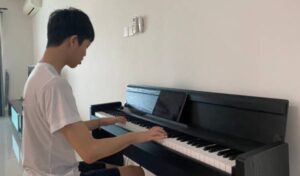
Let’s be real — when you’re 15 and just starting piano, it’s natural to feel a bit paiseh, especially if your cousin has been playing since K2.
But here’s the truth:
Teenagers can absolutely learn piano — and many progress faster than they expect.
In fact, more teens in Singapore are picking it up now than ever. Some play for fun, others chase graded exams, and a few even start composing. The idea that you must start young? That one’s getting old.
Why Starting Later Isn’t a Disadvantage
You might be older, but that’s not a weakness — it’s an advantage.
Why? Because you chose to learn piano. Not your parents. Not some enrichment class you got forced into. You’re in it because you want to be.
And that makes a huge difference.
Also, think about it — you’ve been surrounded by music your whole life. Whether it’s Taylor Swift, JJ Lin, or Ghibli soundtracks, you already feel the music. That instinct helps with rhythm, ear training, and learning songs you actually enjoy.
Teen Brain vs Child Brain – The Learning Edge

Here’s a fun fact: teen brains are wired for deeper learning.
At your age, you’re better at understanding theory, patterns, and structure. That means you can learn chords, dynamics, and musical phrasing faster than a 7-year-old.
And physically?
Your hands are bigger. Stronger. More coordinated.
You won’t struggle to stretch for an octave or balance both hands like a primary school kid might. That alone gives you a head start. So book that Piano Lesson now.
Real Singapore Teen Case Studies
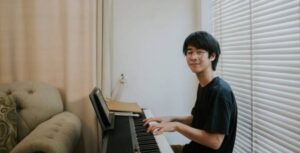
Let’s bring this closer to home.
Shaun, a Sec 4 student, only started piano at 14. Within a year, he was playing Jay Chou’s Love Confession at his class party. By 16? He passed ABRSM Grade 3 — all while juggling school and CCA.
Nadiah, 16, picked up piano during June holidays. She learned anime songs like Your Name and Spirited Away, then posted her covers on TikTok. Now? Over 10,000 followers and counting.
They’re not child prodigies. They’re regular Singapore teens — just like you — who decided to start anyway.
It’s not about when you start. It’s about not waiting any longer.
Common Concerns Teen Learners (and Parents) Have
Before even touching the keys, many teens (and their parents) already carry a bunch of doubts.
Will I fall behind? Do I have time? What if I’m the oldest in the class?
You’re not alone — these are completely normal worries. But let’s break them down one by one, and show why they shouldn’t stop you from starting.
“Will I Ever Catch Up?”

This one pops up a lot — especially when you see a 10-year-old flying through Chopin while you’re still learning scales.
But here’s the thing: piano isn’t a race. And catching up to someone else’s timeline? Totally unnecessary.
In fact, many teens actually learn faster than younger kids because they:
- Understand theory quicker
- Stay more focused in lessons
- Know what they want to achieve
So instead of asking “Will I catch up?”, try asking:
“What can I achieve in the next 3 months if I stay consistent?”
You’ll be surprised at how far you can go.
“I’m Too Busy with School”
Between school, CCA, tuition and maybe even part-time work, life can get hectic. We feel you.
But here’s the good news: you don’t need hours of practice a day.
What you really need is:
- 20 minutes of focused practice
- A clear routine (e.g. right after dinner, 3x a week)
- Smart tools to help you along
Try apps like:
🎵 Simply Piano, flowkey, or Yousician — they guide you through practice step-by-step, and even track your progress.
And if you ever feel stuck?
Just playing a fun piece you enjoy — even for 10 minutes — is better than doing nothing at all.
“I Feel Embarrassed Around Younger Kids”

This is a big one — especially for teens attending music schools with kids half their age.
The fear of being “too old” in a beginner class is real. But here’s what helps:
- Choose 1-to-1 lessons instead of group classes
- Find a teacher experienced with teens
- Remember: most people are too busy worrying about themselves to judge you
Also, many piano teachers now have teen-focused curriculums — you’re not the only one starting later!
And hey — if anything, being the older student comes with perks. You’re more mature, more motivated, and probably quicker to pick things up.
So chin up. You’re not behind — you’re just on your own unique timeline.
Benefits of Starting Piano in Your Teenage Years
Starting piano in your teens isn’t just “not too late” — in many ways, it’s actually a sweet spot.
You’ve got the brainpower, the self-discipline, and (let’s be honest) bigger hands than a Primary 1 kid. You’re at an age where you can learn quickly and appreciate the music more deeply.
Here’s what makes teenage learners stand out:
Stronger Motivation and Focus

When you choose to start piano as a teen, it’s usually your decision — not your parents forcing you into it.
And that matters. Because self-driven motivation is way more powerful than just going through the motions.
You’re likely to:
- Stick to regular practice (even if it’s just 20 mins a day)
- Choose songs you genuinely want to learn
- Keep going even when things get tough
It’s that inner “I want to do this” that gives teens the edge.
Faster Grasp of Music Theory
Let’s be honest — explaining chord structure or rhythm syncopation to a 6-year-old isn’t easy.
But for teens? You’ve probably already touched some of this in school (hello, DSA music kids), or picked it up from learning guitar, violin, or even music production online.
That means you can:
- Understand theory and notation faster
- Connect patterns across different songs
- Learn how music works, not just how to play it
You’re not just memorising — you’re actually understanding. And that makes you a smarter player.
Better Physical Control and Coordination
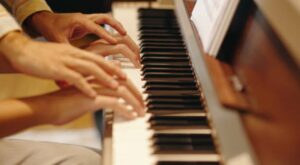
Ever watched a young child try to play with both hands? It’s like watching someone trying to pat their head and rub their belly at the same time.
At your age, you’ve already developed the fine motor skills needed for:
- Smooth hand coordination
- Stronger finger control
- Better dynamics and pedal usage
Plus, your fingers can reach full-size chords without straining — a huge plus when learning adult-level pieces.
So while young kids might have cuteness on their side, you’ve got control, strength, and confidence.
Choosing the Right Learning Path for Teens
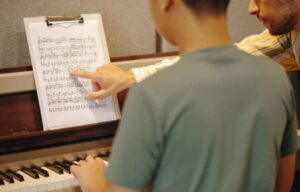
Not every teen learner wants to become a concert pianist or perform on a big stage — and that’s totally fine.
Some just want to play anime songs, others dream of composing, and a few might aim for ABRSM Grade 8 before JC. There’s no one-size-fits-all.
The good news? There’s a piano path for every type of learner — you just have to pick what excites you most.
Let’s explore the options.
Classical, Pop, or Contemporary?
First up — genre matters.
If you love structure, technique, and music with depth, classical might be your thing. Think Chopin, Beethoven, or even cool-sounding movie scores.
If you prefer catchy melodies, emotional vibes, or playing by ear, you might lean toward pop or contemporary music — like JJ Lin, Taylor Swift, or anime openings.
There’s no rule that says you must play Mozart before BTS.
Most teachers in Singapore now blend styles, so feel free to start with what excites you — then build your foundation from there.
Exam Route vs Casual Playing

Now here’s the million-dollar question: Should you take piano exams?
There’s no right answer — it depends on your goals.
Go the exam route (e.g. ABRSM, Trinity, NAFA) if you:
- Want structured progress
- Might use it for DSA or portfolio
- Love ticking off goals and getting certifications
Stick with casual playing if you:
- Just want to enjoy music and de-stress
- Prefer learning songs over scales
- Hate the idea of being graded
Both are valid — you can even start casually and take exams later when you feel ready.
Self-Learning vs Private Lessons
YouTube is great — no doubt. There are teens out there who’ve learned full pop songs just by watching Synthesia videos.
But here’s the truth: if you want proper technique and long-term progress, private lessons are worth the investment.
With a teacher, you get:
- Personalised feedback
- Help breaking bad habits early
- A learning structure that saves time
Self-learning works if you’re super disciplined — but most teens benefit more from at least some 1-to-1 guidance.
Even a hybrid model works well: lessons once a week + YouTube exploration on the side. Best of both worlds!
How Long Will It Take to See Results?

Let’s be honest — nobody wants to feel like a noob forever.
One of the first questions teen learners ask is: “How long until I can actually play something nice?”
The answer? You’ll be surprised how fast progress shows — if you stay consistent. You don’t need years to play your first full song, but you also shouldn’t expect to become Yiruma overnight.
Let’s break it down.
H3: Typical Timeline (3, 6, 12 Months)
After 3 months:
- You should be able to play simple two-hand melodies
- Think: Canon in D (easy version), Perfect by Ed Sheeran, or basic anime themes
- You’ll know basic chords, notation, and finger positions
After 6 months:
- Playing pop songs with chords and both hands becomes smoother
- You might even start trying Grade 1–2 pieces if going exam route
- Sight-reading and rhythm skills improve
After 12 months:
- You could be taking your first piano exam (ABRSM/Trinity)
- Or confidently learning songs on your own
- This is where your confidence really grows
Most teens can reach a decent “hobby” level within a year — no prodigy status required.
Factors That Accelerate Progress
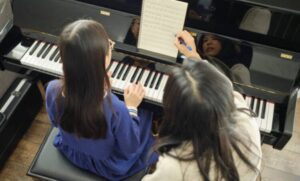
Here’s what helps you learn faster:
- Consistent short practice (20–30 mins, 3–5x/week)
- A good teacher who adapts to your pace and interests
- Playing music you enjoy — it keeps you motivated
- Using practice tools like metronomes, backing tracks, or apps like flowkey
And don’t underestimate mindset. Teens who enjoy the process and don’t stress over being “slow” often make better progress than those who treat it like another exam.
Progress Expectations at Each Stage
Let’s manage some expectations — because the key to not giving up is knowing what’s normal.
In the beginning, your hands may feel clumsy. You’ll press wrong notes. You’ll mess up timing. That’s all part of it.
But with time:
- Your coordination gets smoother
- You stop overthinking every note
- You start playing songs that actually sound good
Piano is like learning a language — awkward at first, natural later. Just keep showing up.
Conclusion: It’s Never Too Late — But You Have to Start
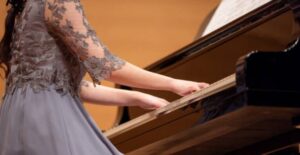
If you’ve read this far, you probably already know the answer: no, it’s not too late to learn piano as a teen.
You’re not “behind”. You’re just starting from a different place — with stronger focus, faster learning, and a better sense of what music actually means to you.
Whether you want to pass Grade 5 or just play your favourite drama OST, it’s 100% possible.
But here’s the thing:
Thinking about it doesn’t make it happen. Starting does.
So go ahead. Book that trial class. Watch that first tutorial. Ask your friend for help.
The only regret most teens have?
Not starting sooner.
 Facebook