
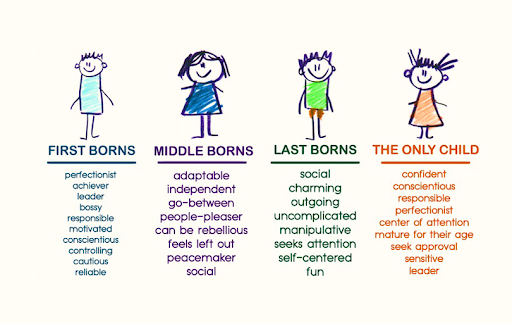
One of my friends has a younger sister, who is the youngest in the family. She’s extraverted, initiates fun activities, and is carefree.
She’s a delight to be with! At least most of the time…
Because she can get manipulative, irresponsible, overly sensitive, and stubborn, become attention-seeking, and rebel without a cause at other times.
Coincidentally, my younger brother used to have some of these traits too!
But that seems to be a common trait among the youngest born children.
Statistically, your youngest child is most likely to be the most spoilt, and have less independence than their older siblings.
But you might notice that your youngest is also the most extroverted, social, resilient, and likes to take risks!
So why is your youngest child this way? Why are so many youngest-born children statistically similar?
Well! Let me tell you about the…
Youngest Child Syndrome
(Credits: Choosing Therapy)
The syndrome is a list of character and personality tendencies that the youngest child of families would tend to have.
For example, the oldest children tend to be more responsible, the middle tends to be quieter than their siblings, and the youngest tends to be the most fun-loving!
These traits are linked to your child’s birth position!
I know it sounds silly, but it does check out pretty logically!
Take the oldest child and their syndrome as an example.
Aren’t you more likely to grow into a responsible leader naturally if you grew up hearing: “Why are you back so late? You’re setting such a bad example for your younger sisters, you know!” often?
How Does The Syndrome Affect My Child?

Physically, it probably won’t do much, if anything at all.
But psychologically, is where it happens.
We all go through experiences in life that shape our thoughts and views.
The experience of being the youngest child is a personally unique but globally shared one.
The Good

A lot of the youngest-born children are confident in socialising and taking risks, and can be quite charming! This could be due to getting more attention because they’re seen as “the baby of the family.”
They also tend to be great problem solvers and are more creative, as they’ve had time to observe their older siblings handle issues.
All of this could mean your youngest child grows up feeling confident, assured, resilient, and adaptable.
The Bad

However, all of the attention and being “babied” is not good for them either!
We all know at least one youngest child who’s spoilt like yoghurt is to milk.
Babying and coddling your youngest child usually means giving in to what they want and letting them off easily.
This will spoil your child, as they won’t learn independence, and they’ll start to feel entitled to receive the same treatment from everyone.
Furthermore, they might turn to doing certain things to prove themselves over their older siblings. This can turn into something toxic in the long run!
Will It Affect Our Family?
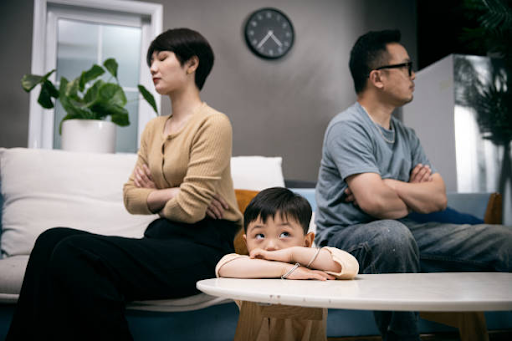
Coddling your youngest child doesn’t just spoil them and turn them irresponsible.
Your older children could also start resenting their youngest sibling!
How would they not?
Do you find yourself giving your older children more household chores? Do you scold them more? Do you put more expectations on them to lead by example?
Well, you’ll certainly be leading them by example to think that their youngest sibling is more precious and loved by you than they are.
Your children will always be trying to one-up the other to get your attention and love.
This could put your children in a perpetual sibling rivalry!
How To Beat The Syndrome!
So now you want to prevent all of that!
But how will you do that when you’re so set in your ways?
Well, let’s start with the most obvious and straightforward one.
Don’t Infantilise Your Youngest Child

‘Infantilising’ is when you treat someone as a child, even if they’re an adult.
Ha! Feeling guilty now, aren’t you? Well, stop it!
Talk to them with the same tone and words that you use with your older children.
Your youngest child is as capable of doing what your oldest child is capable of doing. So don’t make excuses to let them off the hook too!
All my childhood, my younger brother ate McDonald’s hotcakes whenever we had McMornings. So we thought he loved them. We were all shocked when he burst out one day, saying, “No! I don’t want to eat McDonald’s, I hate the Hotcakes!”
It turns out that my parents had always ordered for him and assumed he would like them since he never said he hated them. But he never liked them from the start either!
So let your youngest make their own decisions. They’ll appreciate it.
Forget The Expectations

You’ve probably read a few books on parenting, right?
So you have expectations. That’s undeniable.
You’ll still have expectations from societal norms and conventional family dynamics, even if you didn’t read those parenting books,
Do you know what that does to your children?
It puts them in a box immediately, the moment they’re born.
Remember that everyone is unique. Your oldest, middle, and youngest child won’t have the same personality, likes and dislikes, and capabilities!
So celebrate each child. Don’t compare, but praise them. This might prevent sibling rivalry!
Be Equal

I’m pretty sure 99.9% of parents expect their older children to set good examples for their younger sibling(s).
That’s natural.
But it’s not fair to place a large amount of pressure on them just because they were conceived first!
Most parents are lax in disciplining their youngest child and often give them the easier chores because they coddle them.
This is not fair to your older children too.
Instead, treat them all equally. Love, respect, and talk to them the same.
Assign chores and tasks by their age and abilities, not by their birth order.
Communicate, Communicate, Communicate

Lastly, communicate with your child.
“How was your day, son?”, “Mm, OK lor. I’m going to my room.” Is not communication.
Take the time to catch up with all of your children. Individually to strengthen your relationship or together, so everyone can joke around and bond.
But your younger child might not feel comfortable expressing themselves if they’re always being babied by everyone, as they’re scared of not being taken seriously.
So encourage them to talk about how they feel and what they’re concerned about in school, at tuition, on the playground, or at home.
If your child has trouble in school, one of SmileTutor’s 50,000 tutors can help them!
This will pull the both of you closer together and strengthen your bond.
Conclusion

The youngest child often gets a bad rep.
But with the way most of them were raised, can you blame them?
So parents, just remember:
- Let your youngest child make their own decisions.
- Encourage your youngest child to talk about their feelings and concerns.
- Don’t compare any of your children.
- Love and respect all of them the same.
It’s really that easy.
So don’t make the common parenting mistakes most do with their youngest child. After all, you don’t want them to be someone’s “youngest child horror story”, right?
Having troubling mentoring your youngest child? Let our home tutors help!

 Facebook